
Hardwood Floor Refinishing in Bloomingdale, IL
Sand, stain, and seal existing hardwood back to a like-new finish — no need to cover it up with something new.
What this service is
Floor sanding and staining takes hardwood that's scuffed, dulled, or an outdated color and brings it back to bare wood before applying a fresh stain and protective seal. It's the difference between a floor that looks tired and one that looks like it was just installed — without tearing anything out.
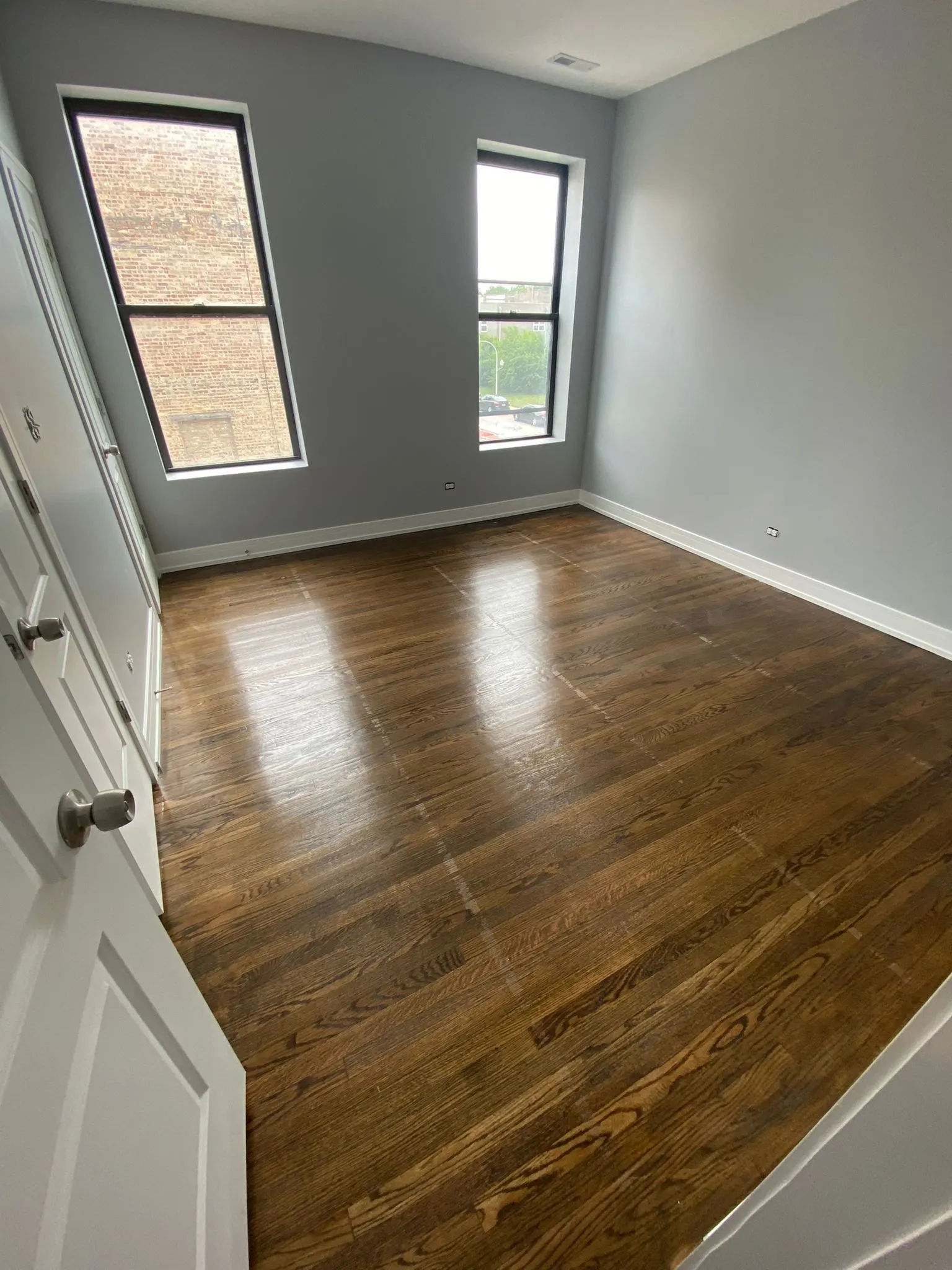
On a recent job, the original hardwood under an older DuPage County home's carpet came out with a rich, dark stain after sanding — wood that had been hidden and dulled for years came back to life once it was leveled and refinished.
Signs your floors are ready for this
- Scratches, scuffs, or dull patches showing through the finish, especially in high-traffic paths
- An outdated stain color you want to change without replacing the wood
- Carpet or old flooring pulled up to reveal original hardwood underneath
- Water spots, minor discoloration, or a finish that's worn through to bare wood in spots
Our process
Assess the wood
Check the wear layer to confirm the floor can be sanded and how many passes it needs.
Sand level
Machine-sand down to bare wood, removing the old finish and evening out the surface.
Stain
Apply the chosen stain color, matched to the rest of the house if needed.
Seal
Protective topcoat applied and cured before furniture goes back in.
What affects the cost
- Square footage being sanded and refinished
- Number of sanding passes the existing floor needs
- Stain and topcoat product chosen
- Room complexity — closets, stairs, and transitions add time
Why P&E Barroche
This is typically one piece of a larger remodel we're already doing in the home — refinished alongside painting and other room work so the finished space reads as one consistent job, not a patchwork of separate contractors.
We refinish hardwood floors for homeowners throughout Bloomingdale and Wheaton, where a lot of the housing stock still has original hardwood worth restoring.
Floor refinishing questions
How do I know if my floors can be sanded again, or if they need to be replaced?
Solid hardwood can usually be sanded down several times over its life. We check the wear layer during the walkthrough — if there's enough wood left above the tongue-and-groove, it's a sanding job, not a replacement.
Can you match the new stain to floors in other rooms?
Yes. If part of the house already has a stain color you like, we'll match new work to it so the whole floor reads as one continuous finish instead of two different jobs.
How long before I can walk on the floors again?
You can usually walk on stocking feet within a day of the final coat, but we recommend keeping furniture off longer while the finish fully cures — we'll give you exact timing for the product used.
Do you sand floors in occupied homes, or does everyone need to move out?
Sanding creates dust and the stain has fumes while curing, so the room being worked on needs to stay clear — but the rest of the house can usually stay occupied. We'll walk you through what to expect for your specific layout.
What condition were the floors in before you refinished them?
On past jobs the original hardwood was scuffed and dulled under years of use — sanding takes it back to bare wood before staining, which is why the color can come out noticeably different (and better) than the old finish.
Related services
Ready to bring your floors back to life?
We'll check the wood and give you a straight number.